
India’s electric vehicle (EV) revolution is picking up speed like never before. January 2026 saw a remarkable 16.45% monthly increase in electric car sales, signaling a powerful comeback for the sector after a slow December. Environmental awareness, expanding charging infrastructure, and falling prices are driving the rapid adoption of electric cars across the country.
Sales data confirms that India is steadily moving toward greener transportation, with competition among automakers intensifying. Confidence in the EV market is growing as passenger car sales climbed from 15,717 in December 2025 to 18,303 in January 2026—a significant jump of over 2,500 vehicles.
Key Highlights from January 2026
- Monthly Sales Growth: 16.45%
- Vehicles Sold: 18,303 (up from 15,717 in December)
- Market Trend: Strong upward trajectory
This resurgence indicates increasing consumer confidence and a growing shift towards electric mobility. Experts believe this momentum could make 2026 a record-breaking year for India’s auto industry.
What’s Driving the EV Surge in India?
- Informed and Conscious Consumers
Today’s buyers are more environmentally conscious and cost-aware. With EVs offering lower running costs compared to petrol and diesel cars, more people are making the switch.
- Expanded Charging Infrastructure
The development of more public and highway charging stations is reducing range anxiety and making EV ownership more practical.
- Government Support
Government incentives, reduced registration fees, and state-level subsidies continue to encourage EV purchases.
- Wider Product Range
Automakers now offer a diverse selection of electric vehicles, from budget-friendly hatchbacks to premium SUVs, catering to a broad audience.
Brand Performance: Leaders and Movers
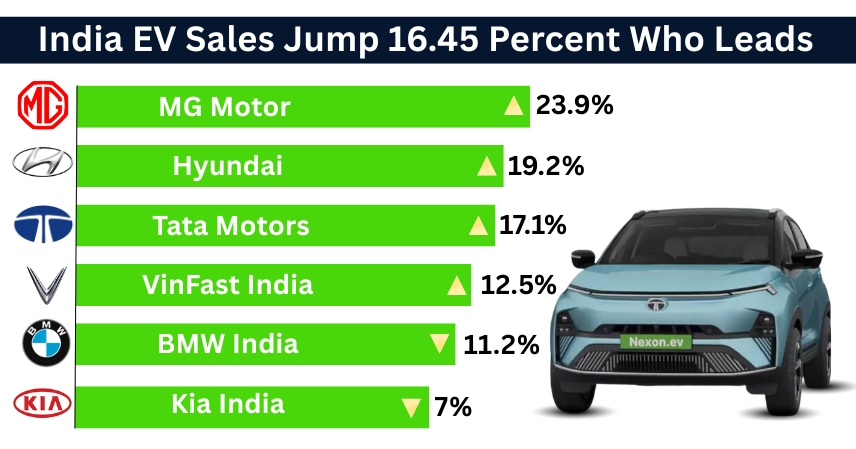
MG Motor India: Fastest-Growing Brand
MG Motor recorded an impressive 23.9% sales growth month-over-month, outpacing the overall market. Their success is attributed to feature-rich interiors, competitive driving ranges, strong value, and a premium feel at accessible prices—making them a top choice for city dwellers transitioning to EVs.
Tata Motors: The Undisputed Leader
Tata.ev maintained its dominant position with a 17.1% sales increase and over 1,100 units sold in January alone. Tata holds about 44% of the EV market, thanks to early investments, localized production, trusted brand reputation, a wide model range, and attractive pricing.
VinFast and Hyundai: Steady Growth
- Hyundai: 19.2% sales growth
- VinFast India: 12.5% increase
Both brands are gaining recognition, signaling that consumers are open to new and global brands alike.
Luxury Brands Struggle
- BMW India: 11.2% decline
- Kia India: 7% drop
Luxury EVs continue to face challenges in India due to high import taxes, steep prices, limited charging compatibility, and perceived value for money.
Market Consolidation: The Power of a Few
Although sales are up, a handful of automakers are capturing the majority of the market—a common pattern in maturing industries. This consolidation benefits consumers through improved service, faster technological advances, enhanced reliability, and better resale prospects. For manufacturers, fierce competition spurs innovation and rapid progress.
Major Trends Shaping India’s EV Market
- Affordability and Wider Access: Dropping prices and longer battery ranges are making EVs accessible to more buyers.
- Smarter, More Demanding Consumers: Buyers now consider factors like battery life, charging speed, total ownership cost, and digital features—beyond just price.
- Technology as a Differentiator: Advanced infotainment, connectivity, and driver-assist features are becoming key selling points.
- Rapid Infrastructure Development: Ongoing expansion of charging stations is making long-distance EV travel more viable and boosting consumer confidence.
What 2026 Offers to EV Buyers
Prospective car buyers in 2026 will benefit from:
- A greater choice of models
- Competitive financing options
- Lower maintenance and fuel costs
- Improved reliability
- A growing resale market
EVs are no longer just for early adopters—mainstream consumers are now prioritizing long-term ownership and value.
Expert Outlook: Sustainable Growth Ahead
January’s spike in sales is not an isolated event—it reflects the robust health of India’s EV market. Automakers are making significant investments in battery production, software ecosystems, local manufacturing, and charging partnerships. These efforts point to a period of sustainable, long-term growth for the sector.
The presence of established manufacturers further boosts market credibility, reassuring buyers who may be hesitant to make the switch.
Challenges That Remain
Despite the progress, several hurdles need to be addressed:
- Limited charging stations in smaller towns and cities
- High battery production costs
- Gaps in consumer awareness
- Supply chain dependencies
Industry experts are optimistic that as production scales up, costs will decrease, making EVs even more affordable.
Looking Ahead: India’s Path to Global EV Leadership
India is positioning itself as a global leader in electric vehicle adoption, driven by:
- Tougher emission standards
- Rising fuel prices
- Increased government incentives
- Fleet electrification
- Advances in battery technology
With these factors in play, EV adoption could accelerate rapidly in the coming years. Experts predict that the next five years will be pivotal for India’s mainstream EV transition.
Conclusion
India’s EV market is experiencing rapid and fundamental growth. The surge in January sales is more than a promising start—it signifies a transformative shift in the auto industry.
Tata remains the market leader, MG is quickly gaining ground, and new entrants are intensifying competition. Enhanced infrastructure and growing consumer trust are propelling electric vehicles into the mainstream.
The message is clear: Electric vehicles are no longer just the future—they are the present. With innovation, affordability, and scale converging, India’s EV revolution is in full swing.
FAQs
18,303 passenger EVs, up from 15,717 in December 2025.
16.45% increase in EV sales.
MG Motor India, with 23.9% growth.
Tata Motors, holding about 44% market share.
Yes, primarily due to high prices and taxes on imports.
Yes, thanks to better infrastructure, stronger government support, and falling costs.