
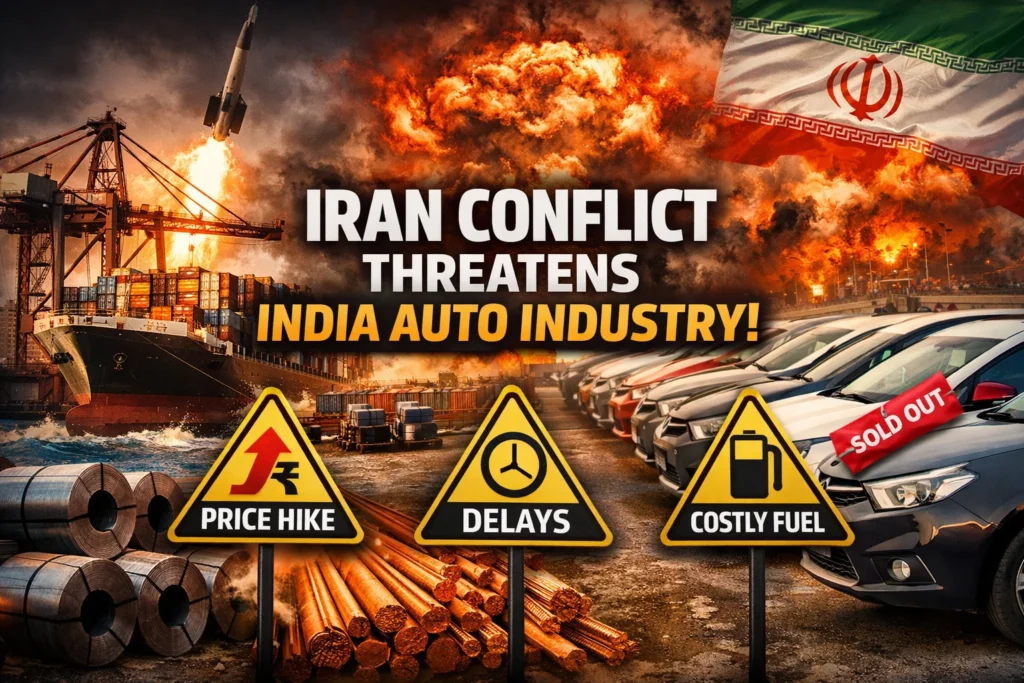
Introduction: Strong Sales, But Trouble Ahead
India Auto Dealers has started FY2026 on a strong note, with retail vehicle sales showing impressive growth. However, a looming global geopolitical crisis could soon disrupt this momentum.
Auto dealers across the country have raised concerns that the ongoing Iran war and wider West Asia conflict may severely impact vehicle supply chains, increase production costs, and eventually push car and bike prices higher in India.
According to the Federation of Automobile Dealers Associations (FADA), the situation is already affecting dispatch timelines, inventory availability, and consumer demand patterns.
Key Highlights
- Over 50% of dealers reported supply or dispatch disruptions
- Around 17.1% dealers facing delays of 3+ weeks
- Rising oil prices increasing logistics & manufacturing costs
- Metals like steel, aluminium, copper becoming expensive
- 36.5% dealers say fuel prices impacting buyer sentiment
- Despite risks, March 2026 auto sales grew 25.28% YoY
Supply Chain Disruption: What’s Happening?
The core issue stems from the ongoing Iran conflict, which has disrupted global energy and shipping routes—especially critical maritime corridors like the Strait of Hormuz.
This has led to:
- Increased fuel costs (diesel, petrol, shipping fuel)
- Higher freight and logistics expenses
- Delays in importing raw materials and components
FADA clearly stated that the “operating environment is clouded” due to the geopolitical situation, with supply chains already showing signs of stress.
A dealer survey revealed that:
- More than half of dealerships have experienced disruptions
- Nearly 1 in 5 dealers are facing serious delays beyond 3 weeks
This is not just a temporary hiccup—it’s an early warning signal of deeper supply-side issues.
Rising Raw Material Costs: The Real Threat
One of the biggest concerns for automakers is the sharp rise in key raw materials.
Due to the conflict:
- Steel, aluminium, and copper prices have surged
- Oil and gas costs have increased significantly
- Manufacturing costs are rising across the board
These materials are fundamental to vehicle production—from chassis and engines to electronics and wiring.
Even India’s largest carmaker, Maruti Suzuki, has already indicated potential price hikes due to rising commodity costs.
This suggests that:
- Entry-level cars may get costlier
- Budget segment could be hit the hardest
- Profit margins for OEMs will shrink unless prices increase
Fuel Prices Impacting Buyer Sentiment
As per India Auto Dealers, It’s not just supply—demand is also getting affected.
As fuel prices rise globally due to the conflict:
- Consumers are becoming more cautious
- Running cost concerns are delaying purchase decisions
According to FADA:
This is especially critical for:
- Entry-level buyers
- Commercial vehicle buyers
- Two-wheeler customers
Expect:
- Shift towards fuel-efficient cars
- Increased interest in CNG and EVs
- Delay in discretionary purchases
Which Segments Are Worst Hit?
The impact is not uniform across the market.
Commercial Vehicles (Most Affected)
- Highly dependent on fuel economics
- Logistics disruption hits fleet operators directly
- Demand slowdown likely
Passenger Vehicles
- Selective variant shortages
- Waiting periods may increase again
Two-Wheelers
- Rural demand sensitive to fuel prices
- Entry-level buyers may postpone purchases
Dealers have already flagged variant-specific shortages, indicating that supply bottlenecks are uneven and could worsen.
Irony: Sales Are Booming Right Now
Interestingly, this warning comes at a time when the Indian auto market is performing exceptionally well.
March 2026 Performance:
- Total retail sales: +25.28% YoY
- Passenger vehicles: +21.48%
- Two-wheelers: +28.68%
- Commercial vehicles: +15.12%
For the full financial year:
- Overall growth stood at 13.3%
Additionally:
- Inventory levels have dropped significantly
- Average stock days reduced from 52 days to 28 days
- This means:
- Demand is strong
- Inventory is already tight
- Any supply disruption will amplify shortages quickly
India Impact: Should Buyers Be Worried?
Short-Term (Next 1–3 Months)
- Minor delays in deliveries
- Slight price hikes expected
- Variant availability issues
Mid-Term (3–6 Months)
- Noticeable price increases
- Waiting periods may rise again (like 2022–23)
- Discounts may disappear
Long-Term (If Conflict Continues)
- Major supply chain realignment
- Increased localization push
- Faster EV adoption
Expert Analysis (CarBikeBHP Take)
This situation is a classic “cost-push inflation + supply shock” scenario for the auto industry.
What makes it serious:
- India Auto Dealers is heavily dependent on imported crude oil
- Auto manufacturing relies on global commodity cycles
- Logistics costs directly affect final vehicle pricing
If the Iran conflict prolongs:
- Expect industry-wide price hikes across brands
- Entry-level segment will face maximum pressure
- EV adoption could accelerate due to fuel volatility
Also, this could indirectly benefit:
- Tata EV lineup
- CNG vehicles (Maruti, Hyundai)
- Hybrid cars (Toyota strategy gets stronger)
Conclusion
India Auto Dealers is currently riding high on strong demand, but global geopolitical tensions—especially the Iran conflict—pose a serious risk to supply chains and pricing stability.
With early signs of disruption already visible, the coming months will be crucial. Buyers, dealers, and manufacturers alike will need to navigate a volatile environment where costs, supply, and demand are all shifting simultaneously.