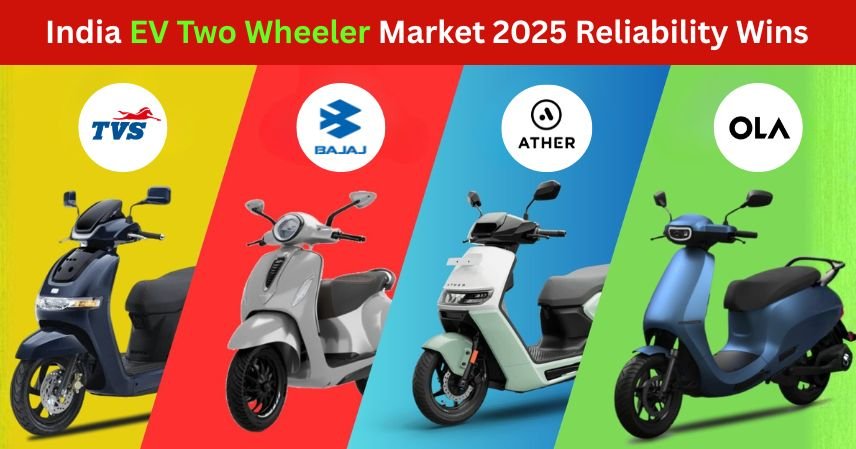
India’s electric two-wheeler sector has moved beyond its experimental phase. What started with curiosity and a fascination for new features has transformed into a market driven by reliability, performance, and everyday usefulness.
Changing Consumer Attitudes: Practicality Over Novelty
Early adopters were drawn in by flashy touchscreens, futuristic designs, and aggressive branding. Many bought electric scooters for the novelty, not necessarily for long-term value. However, customer expectations have evolved since 2025, with buyers now asking:
- Will this electric scooter work reliably every day?
- Is servicing accessible near my home?
- How quickly can issues be resolved?
- Can I trust the brand for years to come?
India’s EV Two-Wheeler Demand: Still Rising in 2025
Contrary to earlier beliefs, demand for electric two-wheelers in India continues to climb in 2025. Key drivers include:
- Escalating petrol prices
- Lower maintenance and running costs
- Growing city charging infrastructure
- State-level government incentives
- Increased awareness of environmental issues
Urban professionals, delivery riders, students, and new homeowners are among the growing customer base. The rise in competition means buyers are no longer willing to tolerate poor ownership experiences.
Market Shakeup: Ola Electric’s Declining Share
Ola Electric once led the market, peaking at roughly 27% share with direct sales and bold marketing. By 2025, Ola’s share has dropped to around 12–13% due to:
- Long wait times, crowded service centers
- Inconsistent customer service
- Limited service reach compared to rivals
- Centralized operations that struggle at scale
- Inventory and internal control issues
As consumers placed more importance on reliability and service, Ola’s operational shortcomings became more visible and impactful.
Why Reliability Matters More Than Ever
The early EV market tolerated compromises. In 2025, mainstream buyers prioritize:
- Reliable daily commuting
- Predictable, accessible service
- Easy availability of spare parts
- Transparent pricing and warranties
- Trust in brand responsibility
When brands fail to deliver, customers quickly turn to competitors.
2025 Market Share: Who Leads the Electric Two-Wheeler Race?
Ather Energy: Service-First Approach
- Predicted 12–14% market share
- Focus on service and consistent ownership
- Regulated growth and strong customer loyalty
TVS Motor: Trust and Durability
- Estimated 18–20% market share
- Extensive dealer/service network
- Steady product rollout, strong brand trust
Bajaj Auto Chetak: Steady and Reliable
- 12–14% market share
- Controlled growth, quality service via dealer network
- Focus on legacy brand trust
Hero MotoCorp (Vida): Gradual Market Entry
- 6–8% market share
- Large service reach, rural and small-town brand strength
- Emphasis on durability, not aggressive expansion
Ampere Electric: Value and Accessibility
- 8–10% market share
- Budget-friendly, strong in Tier 2/3 cities
- Focus on utility and public transport segment
Other Brands: Growth Stalls Over Service Issues
- Okinawa, Pure EV, Revolt, Bounce Infinity: 10–12% market share combined
- Slower growth due to service and reliability challenges
The Real Differentiator: After-Sales Service
Unlike the established petrol two-wheeler market, EV brands are still building their service ecosystems. In 2025, after-sales support, dealer reach, and reliability outweigh flashy features or marketing buzz.
Ola Electric’s Structural Challenges
Ola’s struggles are rooted in operational scale rather than technology or ambition:
- Service infrastructure must grow with sales
- In-person presence remains vital in India
- Centralized models struggle in diverse markets
- Building (and keeping) customer trust takes time
Key Lessons for India’s EV Manufacturers
The Ola experience highlights a crucial market truth:
You can sell excitement once, but trust must be earned daily.
The next decade will favor companies that prioritize operational excellence, consistent service, and reliable ownership.
Can Ola Electric Stage a Comeback?
Recovery is possible with significant improvements in:
- Expanding service networks
- Dealer/partner models
- Inventory and governance systems
- Delivering a consistent ownership experience
In a maturing market, solid execution is more important than bold vision. Reliability will determine long-term winners.
Conclusion
India’s EV two-wheeler market is all about reliability in 2025. The brands that focus on fundamentals—not just hype—will thrive as the sector matures.
FAQs
No, demand is still rising—so is competition.
Weaknesses in service, operations, and ownership experience.
TVS, Ather, Bajaj, and Hero MotoCorp are seen as most reliable.
Predictable costs, accessible service, and reliability.
Yes, but only through major improvements in service and operations.