
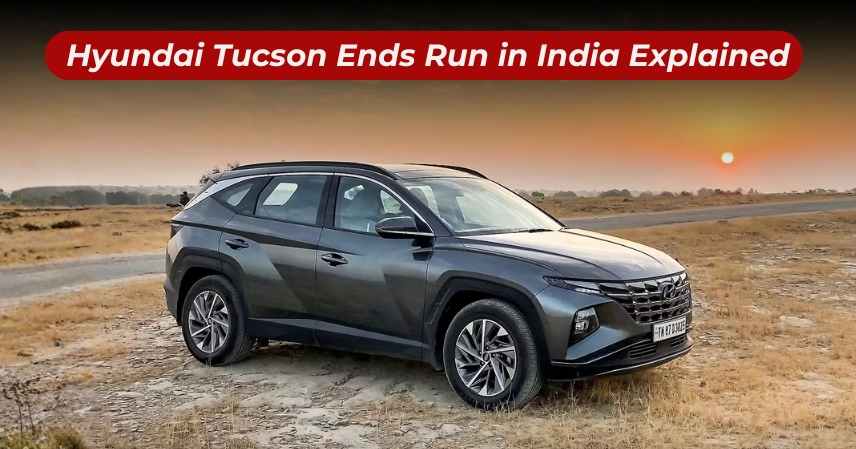
Hyundai Motor India has unexpectedly discontinued the Tucson SUV, one of its premium offerings, in India. Globally, the Hyundai Tucson is known for its style, comfort, and advanced technology, but its Indian journey faced unique challenges. This article explores why the Tucson was discontinued, Hyundai’s strategic shift, and what the future holds for Indian SUV buyers.
Understanding the Hyundai Tucson’s Market Position
Where Did Tucson Fit in the Indian Market?
The Hyundai Tucson was positioned as a luxury SUV, competing with rivals like the Jeep Compass, Volkswagen Tiguan, and Citroën C5 Aircross. It sat above the Alcazar and Creta in Hyundai’s India lineup.
Why Didn’t Tucson Succeed in India?
Despite global popularity, the Tucson struggled in India due to limited model choices, high pricing, and low localization. Being imported as a Completely Knocked Down (CKD) unit, production costs were high, pushing its price above locally assembled alternatives.
Key Specifications of the Hyundai Tucson
- Engine Options: 2.0L Petrol and 2.0L Diesel
- Power Output: 156 hp (Petrol), 186 hp (Diesel)
- Transmission: 6-speed AT (Petrol), 8-speed AT (Diesel)
- Drivetrain: 2WD or AWD (Diesel)
- Price Range (Before Discontinuation): ₹29.02 – ₹35.94 lakh (ex-showroom)
Despite its high quality and advanced tech, Tucson’s high price and limited appeal kept its sales low.
Hyundai’s New Strategy for the Indian Market
Focus on High-Volume, Localized Models
Hyundai is now concentrating on vehicles that appeal to wider audiences and can be produced at scale. Its current lineup emphasizes SUVs such as the Creta, Venue, and Exter.
Key Elements of Hyundai’s Future Plan
- Expand the electric vehicle portfolio with models like the Ioniq 5 and Creta EV
- Strengthen presence in compact and sub-4m SUV segments
- Avoid low-volume CKD imports due to high costs
The Tucson sold around 100 units monthly, making it unsustainable compared to high-volume models.
Verified Reasons for Tucson’s Discontinuation
High Prices and Weak Demand
Tucson’s pricing put it close to entry-level luxury brands like BMW X1 and Audi Q3, while Indian buyers often prefer feature-rich alternatives like Tata Safari or MG Hector Plus at lowe prices.
Limited Localization
CKD assembly increased production costs. Hyundai found better value in locally developed models like Creta and Alcazar, which benefit from economies of scale.
Shift Toward Electrification
Hyundai is investing heavily in electric mobility. The upcoming Creta EV (expected 2025) reflects this strategic pivot.
Upcoming New Models
New versions of Creta, Venue, and Santa Fe are due in 2025–26, offering more features and modern technology.
Changing Consumer Preferences
The premium SUV segment in India is moving towards hybrid and electric vehicles. Hyundai is aligning its products with this trend, phasing out pure ICE models like the Tucson.
The Hyundai Tucson’s Legacy in India
Despite modest sales, Tucson earned praise for:
- High build quality
- Comfortable ride
- Powerful diesel engine
- Advanced Level 2 ADAS safety features
The 2022 update brought new styling and technology, but it wasn’t enough to boost popularity.
What Should Hyundai SUV Buyers Do Next?
Hyundai’s High-End SUV Plans
Hyundai isn’t leaving the premium SUV segment—it’s revamping its offerings:
Model | Fuel Type | Expected Launch | Segment |
Hyundai Creta EV | Electric | Early 2025 | Compact SUV |
Hyundai Alcazar Facelift | Petrol/Diesel | Mid 2025 | 7-Seater SUV |
New Gen Hyundai Santa Fe | Hybrid | Late 2026 | Premium SUV |
Hyundai’s new direction focuses on electrification, local manufacturing, and innovative design.
Industry Insights
Experts say Hyundai’s decision is part of its global strategy to streamline operations, cut CKD imports, and invest in electric mobility. The Creta EV and Santa Fe Hybrid are expected to fill the Tucson’s gap with better technology and competitive pricing.
Final Thoughts
The discontinuation of Hyundai Tucson marks the end of Hyundai’s premium ICE SUV era in India. Though Tucson fans may be disappointed, this move shows Hyundai’s commitment to electric and eco-friendly vehicles. With upcoming launches of electric and hybrid SUVs, Indian buyers can expect more features, better technology, and greater value in Hyundai’s new lineup.
FAQs
Low sales, high production costs (due to CKD assembly), and Hyundai’s shift toward electric and locally-made models led to the Tucson’s discontinuation.
A future return is possible, especially as a hybrid or electric, depending on market demand and Hyundai’s EV plans.
Jeep Compass, Tata Safari, MG Hector Plus, and the upcoming Creta EV.
Between ₹29.02 lakh and ₹35.94 lakh (ex-showroom).
Electric and high-volume SUVs like Creta EV, Venue, and Ioniq 5.